








A Journey into Metal, Myth, and Mastery
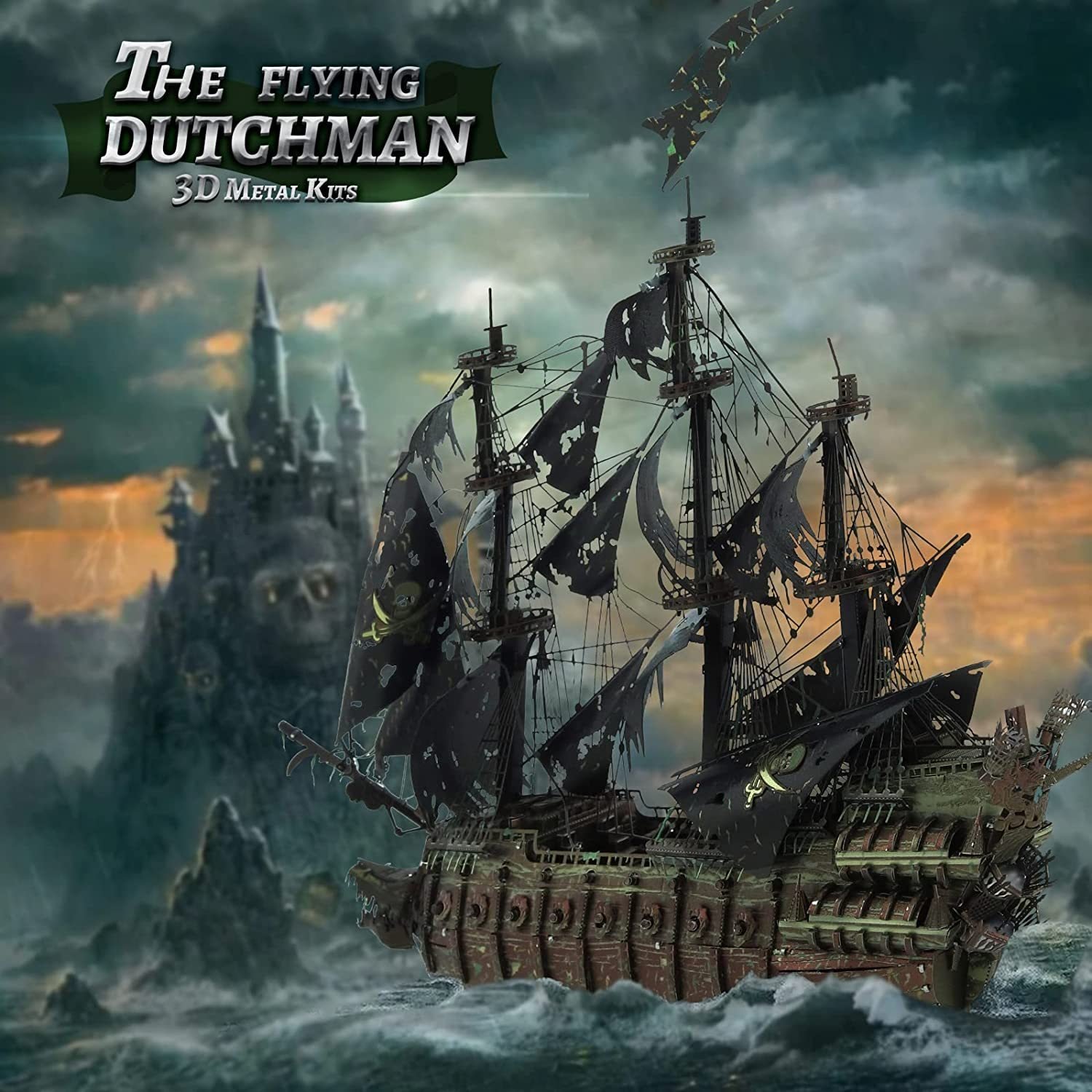
Among all metal puzzle models, few evoke imagination quite like the Flying Dutchman Pirate Ship. Inspired by one of the most enduring maritime legends in European folklore, this model is more than a build—it is a slow, immersive journey through craftsmanship, patience, and design.From the first cut of metal to the final raised sail, the Flying Dutchman delivers an experience that balances technical challenge with deep visual reward.
First Impressions: A Ship with Presence
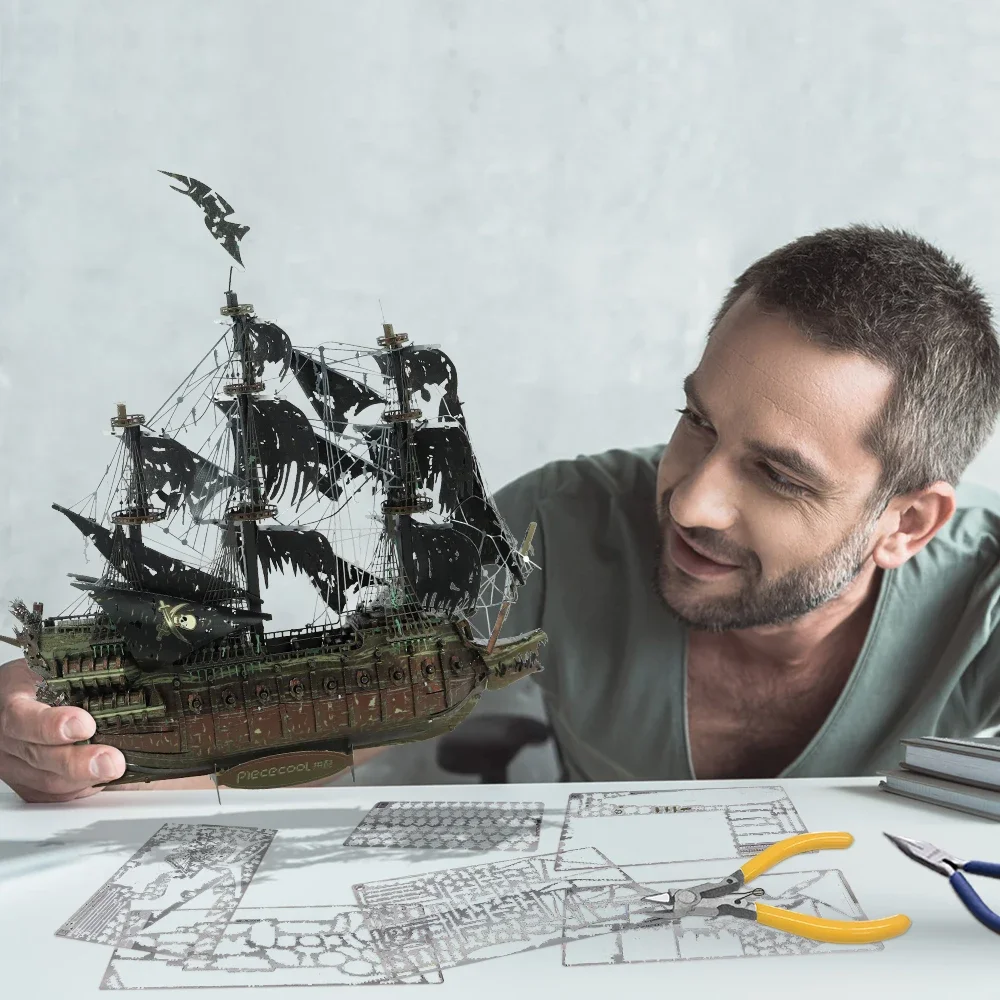
Even before assembly begins, the character of the model is clear.The metal sheets are finely etched with layered hull planks, ornate railings, and aggressive sail geometry, hinting at the ship’s ghostly reputation. The dark metallic finish adds depth and atmosphere, giving the model a dramatic presence that feels intentionally aged rather than decorative.This is not a casual toy. It is a model designed to be built slowly and appreciated closely.
The Assembly Process: Step by Step into the Legend
Precision from the First Cut
Removing the parts from the metal sheets immediately sets the tone. Each piece is cleanly cut, with sharp edges and clearly defined fold lines. Clippers glide through connection points with minimal resistance, and the metal retains its rigidity without feeling brittle.
As the hull begins to take shape, the logic of the engineering becomes apparent. Tabs and slots align with reassuring accuracy. There is no forcing, no guessing—just a clear mechanical language guiding each step.
Hull Construction: Structure Before Beauty
The early stages focus on the ship’s internal structure. Reinforcing ribs, base frames, and lower hull panels come together to form a solid foundation. This phase rewards patience; careful bending ensures symmetry and stability later on.
At this stage, the model feels technical and methodical—almost architectural.
Details That Tell a Story
As assembly progresses, the Flying Dutchman reveals its personality.
Cannons, railings, mast supports, and decorative elements add complexity without overwhelming the builder. Each component has a purpose, and the layering of parts creates real depth rather than flat decoration.
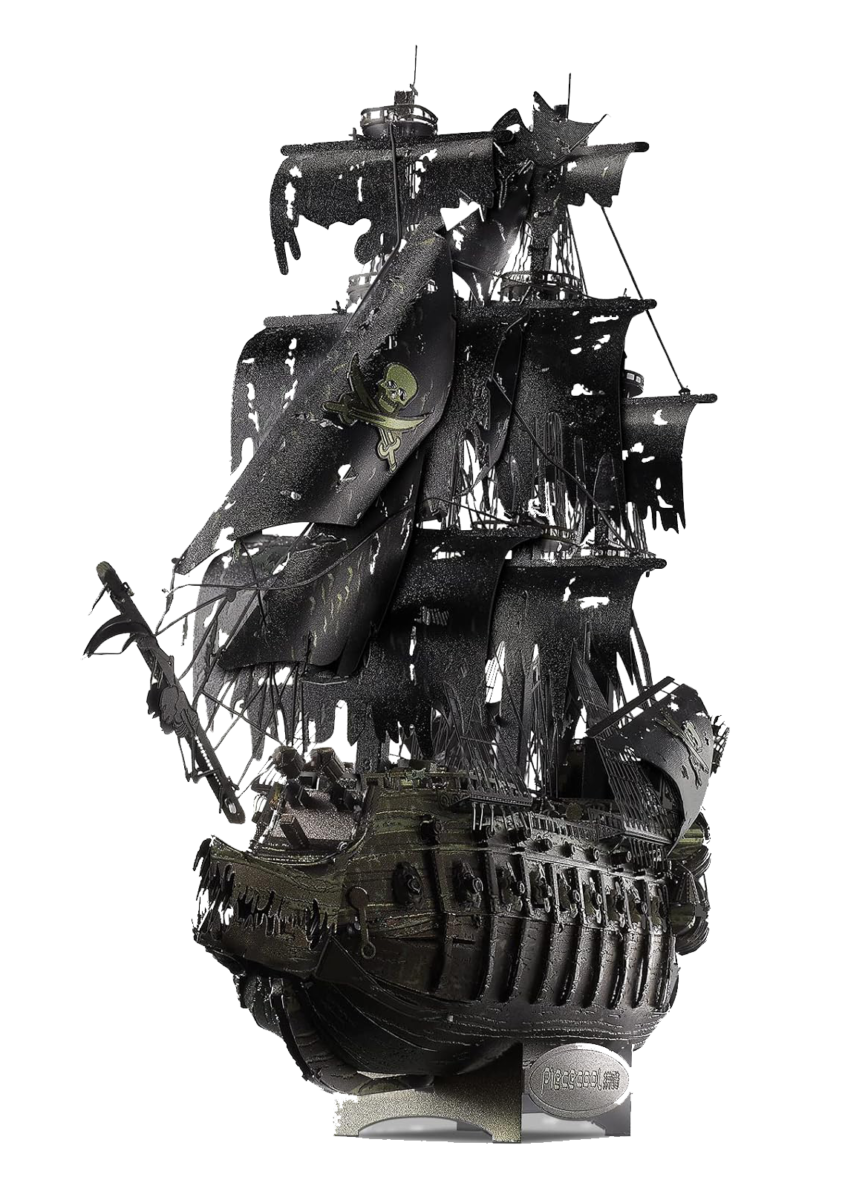
The sails, in particular, are a highlight. Their angular forms and skeletal construction give the ship its unmistakable silhouette—both elegant and menacing.
The Build Experience: Focused, Calm, and Rewarding
This is a model that demands attention but never punishes the builder.
The challenge lies not in difficulty for its own sake, but in maintaining precision and rhythm. Bending tabs gently, aligning angles, and checking orientation become meditative rather than stressful.
There is a noticeable sense of flow:
Cut
Bend
Secure
Repeat
Time passes quietly. The process becomes immersive.
For experienced builders, the Flying Dutchman offers enough complexity to remain engaging. For ambitious beginners, it provides a clear path toward mastering advanced metal assembly techniques.
Material Quality: Metal That Feels Intentional
The alloy used in this model strikes an excellent balance between strength and workability.
It holds sharp folds without cracking, resists deformation during handling, and maintains crisp edges even after multiple connections.
The surface finish deserves special mention. Light reflects subtly across the etched textures, enhancing depth without appearing glossy or artificial. Once assembled, the model feels cohesive—like a single sculptural object rather than a collection of parts.
This level of material quality supports both long-term durability and display value.
Design as Art: When Engineering Meets Aesthetics
What truly sets the Flying Dutchman apart is its design philosophy.
This model does not rely on color or excess ornamentation. Instead, it uses:
Structural layering
Shadow and negative space
Proportion and symmetry
The result is a ship that looks striking from every angle. Whether viewed up close or from across a room, it communicates movement, weight, and tension—qualities rarely achieved in small-scale models.
Once completed, it feels less like a puzzle and more like a metal sculpture rooted in maritime myth.
The Moment of Completion: Earned Satisfaction
The final assembly step—securing the last mast or sail—is deeply satisfying.
There is a moment of pause, followed by a natural instinct to rotate the model slowly, checking lines and balance.
The Flying Dutchman stands confidently.
It feels earned.
Unlike disposable entertainment, this is the kind of build that leaves a lasting impression. You remember the sequence, the challenges, and the quiet satisfaction of seeing something complex come together through your own hands.
Display & Long-Term Value
Once placed on display, the model continues to reward attention.
Its intricate silhouette casts interesting shadows, and its details reveal themselves gradually over time.
It works equally well:
On a desk
On a bookshelf
In a display cabinet
As a gift, it communicates thoughtfulness and depth. As a personal project, it represents focus and craftsmanship.
Final Recommendation
The Flying Dutchman Metal Puzzle is highly recommended for:
Builders who enjoy structured, meaningful assembly
Fans of maritime history and European legend
Collectors seeking display-worthy metal models
Anyone who values design, material quality, and hands-on creation
This is not a fast build—and that is precisely its strength.
If you are looking for a metal puzzle that combines challenge, atmosphere, and lasting satisfaction, the Flying Dutchman is an exceptional choice.